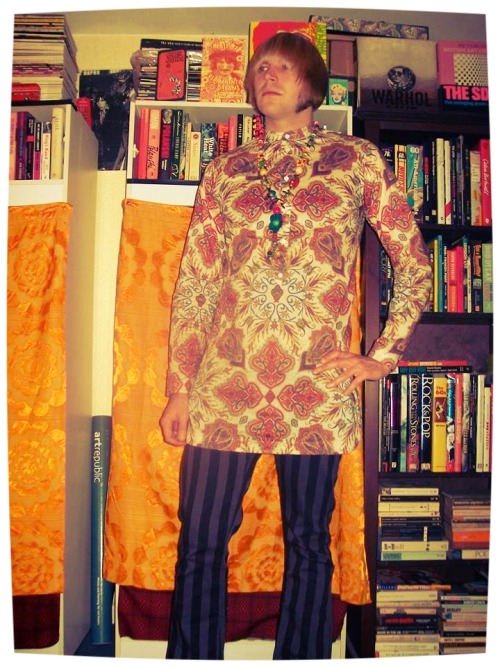
"Did you ever dream about a place you never really recall being to before? A place that maybe only exists in your imagination? Some place far away, half remembered when you wake up. When you were there, though, you knew the language. You knew your way around. That was the sixties....
No. It wasn't that either. It was just '66 and early '67. That's all there was....."
Showing posts with label Peacock revolution. Show all posts
Showing posts with label Peacock revolution. Show all posts
This is going to be my last post for a while. During next few months, I will be far too busy to regularly update this blog. I can't really tell how long this hiatus is going to be, but hopefully I will be back before the end of this year.
Before I go, I want to share some great 1960's British Psych tunes I have been enjoying lately..
Elmer Gantry's Velvet Opera - 'Dream Starts' - 1968
Standout track from Elmer Gantry's Velvet Opera's sole album released in 1968. Nice melody, and those distorted vocals sound really good..
Elmer Gantry's Velvet Opera, 1968
Hat And Tie - 'Finding It Rough' - 1967
Hat and Tie were a duo consisting of Christopher Thomas and Patrick Campbell-Lyons (also a one-time member of July and Nirvana). 'Finding It Rough' was their second single, released in April 1967. Despite being incredibly catchy,this sitar-led piece of psych-pop did not chart, and Hat And Tie disbanded soon after.
Geranium Pond - 'Dogs In Baskets' - 1968
I've heard this song at the Mousetrap last week, and I have been listening to it on repeat since. There is precious little information about Geranium Pond. According to British Music Archive, this group originated from London, and 'Dogs In Baskets' was their only release. There is also some evidence, that the Geranium Pond shared the bill with the likes of The Nice and The Move.
'Dogs In Baskets' is a mellotron and harpsichord-led ,whimsical lullaby in a style of Syd Barrett. Listen to it here.
Tintern Abbey - Vaccum Cleaner - 1967
Unquestionable cult classic, 'Vaccum Cleaner' was a B-side to Tintern Abbey's single 'Beeside' from 1967. This highly collectible seven inch will today set you back nearly a grand. The lyrics of 'Vaccum Cleaner' were pretty risque at the time...
Break it up, break it up, let's have it now girl
Don't you know I need it all the time
Fix me up with your sweet dose, now I'm feeling like a ghost
Whoah whoah whoah whoah all the time
Now my head is really spinnin
maybe now I'll show some willin
To help you with house work, if you want to...
Yep, no prize for guessing what this song is about... Surprisingly, there is no mention of this song ever being banned by the BBC. But then again, it was only a B-side.
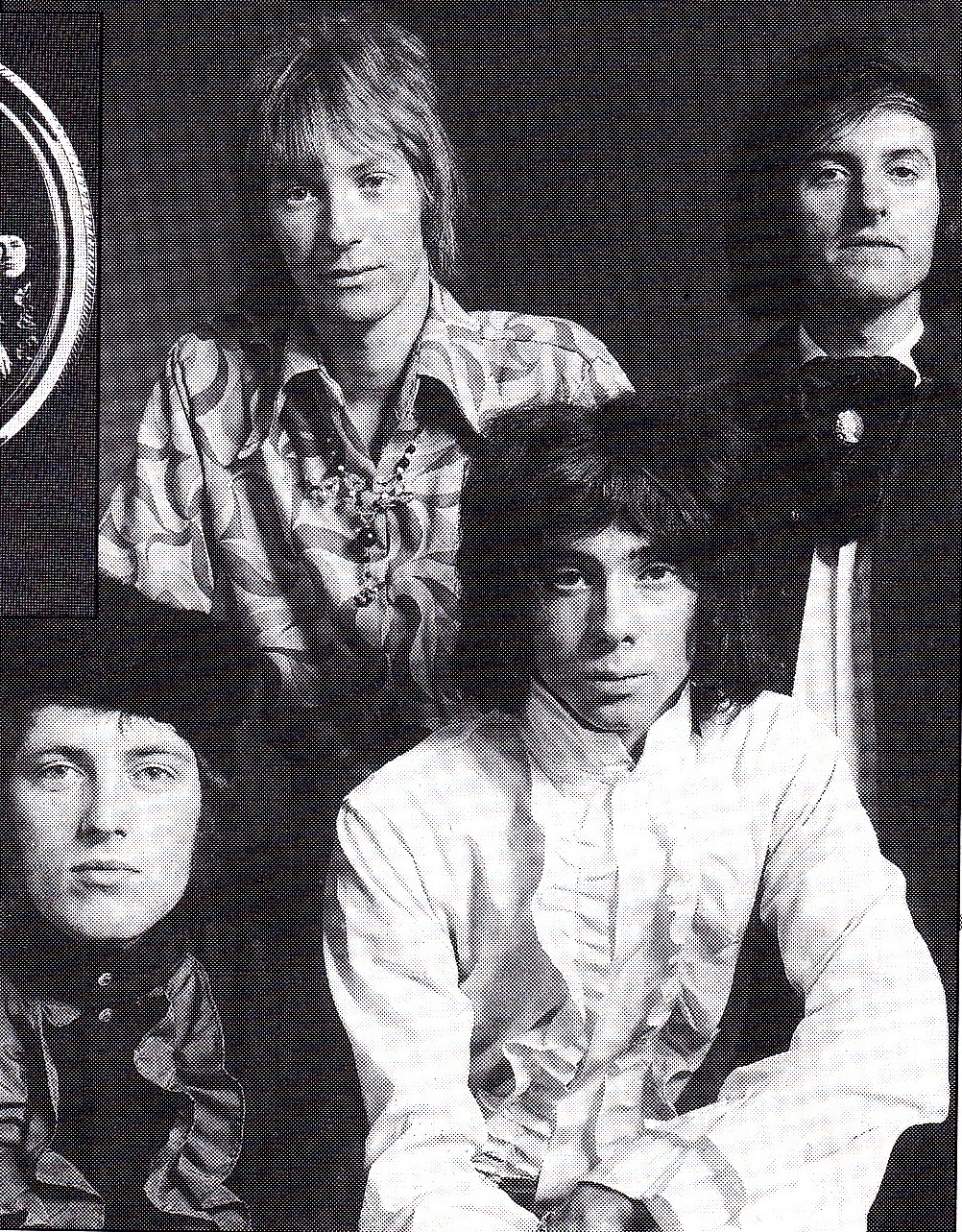
Now I finally have an excuse to post this great photo of Tintern Abbey. Psychedelic/Peacock style at its finest. I absolutely love that jacket on the left.
The Quik - 'I Can't Sleep' - 1967
Not much is known about The Quik. They released three singles on Deram in 1967. 'I Can't Sleep' was the final one - It is a fantastic piece of dark, Hammond-led psychedelia..
The Fox - 'Hey! Mr. Carpenter' - 1968
The Fox, 1968
Another cult classic. Great dance number, and obligatory play at any decent Psych night (I always get the those Hey's wrong when I try to sing along to it)
The Fox were a short-lived band from Brighton. They released an album For Fox Sake (see what they did there?) on Fontana in 1968, which disappeared without a trace, and the band split up soon after. 'Hey! Mr. Carpenter' has been popping up on various psych compilations (including Bam Caruso's Rubble) since 1980's, and since then it's been universally acclaimed by Psych fans as one of the British Psychedelia's finest moments.
The Kinks - Big Black Smoke - 1966
I'll end with this lesser known track by The Kinks from their 1966 album Face To Face. It is a grim, cautionary tale about a young girl from provincial town and her misadventures in London. Healthy dose of reality after all this psychedelic stuff..
The Kinks, 1966
So, That's about it for now. See you again in about 2 or 3 months!!!
BIBLIOGRAPHY
Terry Rawlings, Then, Now an Rare: British Beat 1960-1969, Omnibus Press, 2002
Today, The Herd are mostly known as 'Peter Frampton's first band', which is a shame, because they certainly deserve to be remembered for more than that. Not only they were one of the best British Pop-Psych acts of 1967-1968, but they also were one of the best dressed bands of that time. Psychedelic/Peacock style was not an easy look to pull off and there was a thin line between 'flamboyant cool' and plain ridiculous (If you ever saw photos of The Move circa 1967, you know what I mean). The Herd, however always looked immaculate - especially keyboard player Andy Bown, who wore Regency jackets and had a great Mod haircut.
The Herd in 1968. From left: Andrew Steele, Andy Bown, Gary Taylor and Peter Frampton
The Herd in 1967. I love Andy Bown's red, double-breasted Regency jacket and Peter Frampton's blue velvet top/silver belt buckle combo..
The Herd, early 1968. Again, great Regency jackets worn by Peter Frampton (bottom left) and Andy Bown (bottom right).
The Herd formed in 1965 from the ashes of two Kent groups The Preachers and Moon's Train. Fifteen year-old Peter Frampton (who incidentally, was a former schoolfriend of David Bowie) was already making a name for himself as one of the most talented young guitarists in London area. The Herd were taken under the wing of Rolling Stone Bill Wyman, who once used to be in the same band as The Herd's drummer Tony Chapman. Wyman recommended The Herd to Parlophone. They recorded Jagger/Richards composition 'So Much In Love' and covered 'He Was Really Sayin' Something' by The Velvelettes. Both singles flopped and The Herd were dropped by Parlophone and deserted by their manager Billy Gaff. Soon after Tony Chapman and singer Terry Clark also quit. That could have been the end of The Herd, but the band was taken over by managers Alan Howard and Ken Blaikley who saw potential in Peter Frampton. They promoted him to a lead vocalist and they moved bass player Andy Bown to organ, with Gary Taylor taking over responsibilities of a bassist. That line-up was completed by new drummer Andrew Steele. The Herd signed to Fontana, and in 1967 released their first single for a new label. titled 'I Can Fly'. It is a great piece of psychedelic pop, but for some bizarre reason, it barely mustered the charts in Britain (it was a big hit in Germany, though).
The Herd performing 'I Can Fly' on TV show The Beat Club
Peter Frampton
Andy Bown (that jacket again!)
During recording The Beat Club performance
NME ad for 'I Can Fly', 1967
After 'I Can Fly' flopped, Howard and Blaikley encouraged The Herd to play more ambitious material. Their next single, 'From The Underworld' was a psychedelic adaptation of Jacques Offenbach's operetta Orpheus In The Underworld.
The Herd performing 'From The Underworld' on The Beat Club, 1967
'From The Underworld' was hit, reaching number six in November 1967. Their next single,'Paradise Lost' - an adaptation of John Milton's most famous poem - was also a hit in January 1968.
The Herd performing 'Paradise Lost' on The Beat Club, 1968
Andrew Steele
Cover of the single 'From The Underworld' 1967
The Herd performing live, 1967
Height of psychedelic cool - Peter Frampton and Gary Taylor, early 1968.
The success of 'From The Underworld' and 'Paradise Lost' elevated The Herd to stardom. They toured with The Kinks and The Who and were photographed for hip magazines such as Rave.
Ad for October/November 1967 package tour of The Who, Traffic, The Herd, Marmalade and The Tremeloes.
Another package tour in April 1968, this time with The Kinks and Gary Walker.
Article about The Herd in Melody Maker, early 1968 (click to enlarge)
I love this photo from late 1967..
The Herd sporting the newest Carnaby Street fashions. I like Andrew Steele's fur coat. Not sure about that red PVC jacket, though.
I love Andy Bown's stripy blazer/black ribbon combo. Meanwhile, Andrew Steele is sticking with PVC..
Peter Frampton's good looks did not go unnoticed - Rave magazine declared him 'The Face Of 1968' giving him first taste of life as a teen idol.
Peter Frampton on the cover of Rave, January 1968.
In April 1968, The Herd released straightforward pop single 'I Don't Want Our Lovin' To Die' which turned out to be their most successful recording, reaching number 5 in charts.
Press ad for 'I Don't Want Our Lovin' To Die', April 1968.
Howard and Blaikley were forcing The Herd to record melodic pop songs, which did not sit well with Frampton and Bown, who wanted to move more into heavier sounds. Nevertheless, Frampton and Bown wrote few psych/pop songs together, including a single 'Sunshine Cottage'.
The Herd, 1968
1968. More great Carnaby clobber..
The Herd in Teenbeat magazine, 1968
Strangely enough, Frampton and Bown ended up giving away one of their best compositions - 'I Lied To Auntie May' - which was recorded by their mates, London group called The Neat Change. They were quite an interesting band - arguably first ever Skinhead band, The Neat Change performed soul material in Soho's Mod clubs. Apparently their sound was not dissimilar to The Action (with whom they often shared the bill at The Marquee). I say 'apparently' because no recording of The Neat Change from that era exist.
The Neat Change as Skinheads, circa 1968
In 1968, following the advice of their management, The Neat Change ditched Skinhead look, Soul sound and 'went psychedelic'. They recorded Frampton and Bown's 'I Lied To Auntie May' - a brilliant piece of melodic pop-psych.
The Neat Change few months later...
It's a great song, and I am not sure whether The Herd ever recorded it themselves. The Neat Change did a great job, but it turned out to be their only ever single as they split up soon after (find out more about that interesting band here)
After 'Sunshine Cottage' flopped, Peter Frampton grew more and more disillusioned with The Herd. He hated his new heartthrob image and wanted to be appreciated as a guitarist. In the late 1968, he briefly considered accepting an invitation to join Small Faces on guitar. Although that did not happen, Frampton and Small Faces lead singer Steve Marriott formed a friendship which soon prompted them to quit their respective bands and start heavy blues-rock outfit Humble Pie in 1969.
The Herd, late 1968
The Herd briefly tried to continue without Frampton, with Bown on vocals. They recorded single 'The Game' in 1969. It was not a successful record (artistically or commercially), and the band split up soon after.
Frampton was still on a sleeve photo of 'The Game' even though he was no longer in the band.
We all know what happened to Frampton - few successful albums with Humble Pie, initially semi-successful solo career and finally, superstardom in America after Frampton Comes Alive unexpectedly sold fifteen million copies in 1976.
Frampton on the cover of the Rolling Stone, 1976
Frampton's former bandmate Andy Bown also tried solo career. In 1970, he released a Pop-Psych single 'Tarot' (as Andrew Bown). Although interesting, it was not successful - not until few years later at least, when it was used as a theme for TV series Ace Of Wands. Andy Bown ended up joining Status Quo in 1976 with whom he still plays today...
Andy Bown's 'Tarot'
I'll end with few more pictures of The Herd
1968 (just ignore that PVC)
1968
BIBLIOGRAPHY
Terry Rawlings, Then, Now and Rare: British Beat 1960-1969.
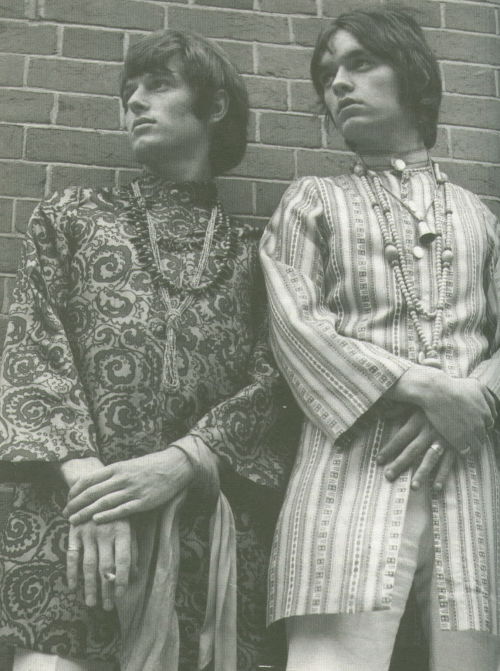
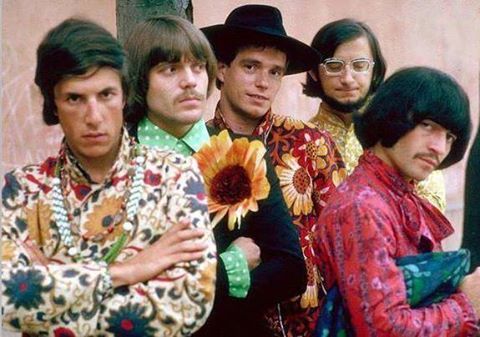
When it comes to male fashion, kaftans will always be associated with that brief period between late 1966 and early 1968. For those several months kaftans were all the rage - an obligatory component of psychedelic dandy/peacock/hippie look.
The term 'kaftan' is not really correct. Kaftan is a garment of Persian origin - a type of overdress usually reaching the ankles, with long sleeves. 'Kaftans' worn by fashionable men in late 1960's were in reality Nehru Jackets. It is a garment of Indian origin, named after Pandit Jewarharlal Nehru - a Prime Minister of India between 1947 and 1964. He often wore front-buttoned, knee-length jackets with mandarin collar known as ackhan or sherwani.
Pandit Jewarharlal Nehru
In the late 1940's, the garment based on ackhan was created in India, and it was known as Band Gale Ka coat ('Closed Neck' coat). It was considerably shorter that ackhan, usually only reaching hips rather than knees. In fact, apart from the mandarin collar, the garment closely resembled normal suit jacket. Band Gale Ka coat were popular in India as a top half of the suit for formal occasions. In early 1960's, it was popularised in western Europe in America, where it was known as 'Nehru jacket' (Even though Pandit Jewrharlal Nehru never actually wore it himself!). One of earliest examples of Nehru jacket in Western popular culture was the outfit of Dr. No - the villain from 1962 James Bond movie.
By the mid-1960's, the Nehru jacket became a part of late Mod/early Hippie Carnaby Street look.
The Who's Roger Daltrey (second left) wearing a nehru jacket appropriated for late-period Mod style, 1966
From 1967 Carnaby Street Modern Man catalogue - note the incorrect use of the term 'Kaftan'.
These clothes were a little bit of hybrid - they were too short to be proper Kaftans, and often too long to be proper Nehru jackets. Nevertheless, both terms were often used (just like Peacock style was often referred to as 'Regency', even though it hardly ever resembled actual Regency-era styles - but that's a subject for a different post). These Nehru Jackets/Kaftans ere often designed with a generous use of Paisley, Liberty prints, various kinds of embroidery or 'Eastern' patterns (Indian, Chinese, Persian, there were even elements of Russian and Central European peasant dress) - a true mish-mash of styles and influences.
Here are my favourite examples:
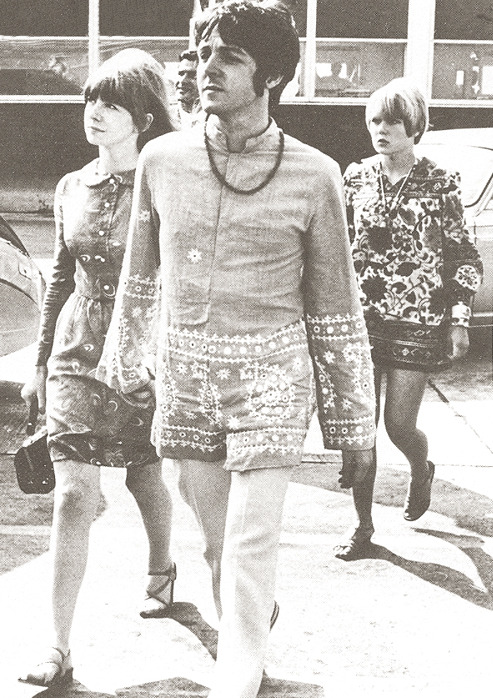
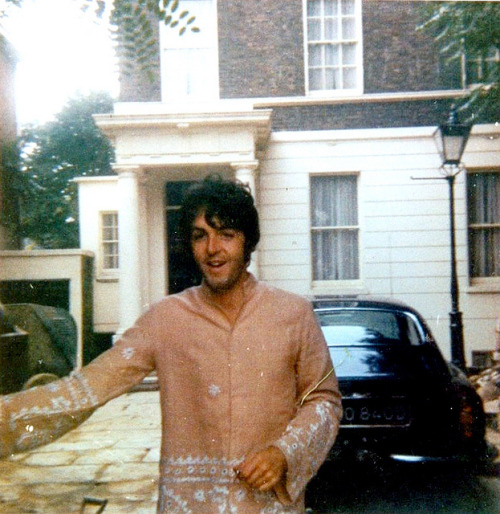
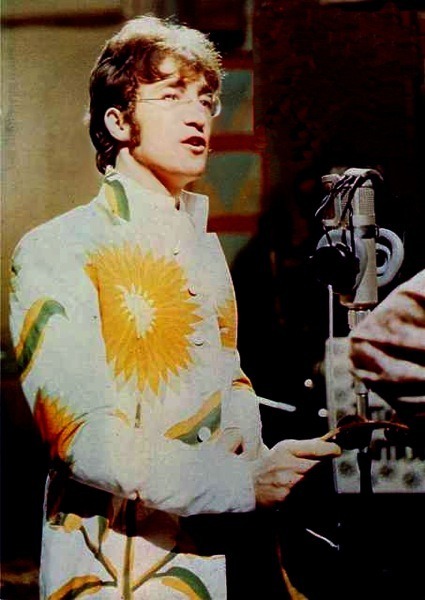
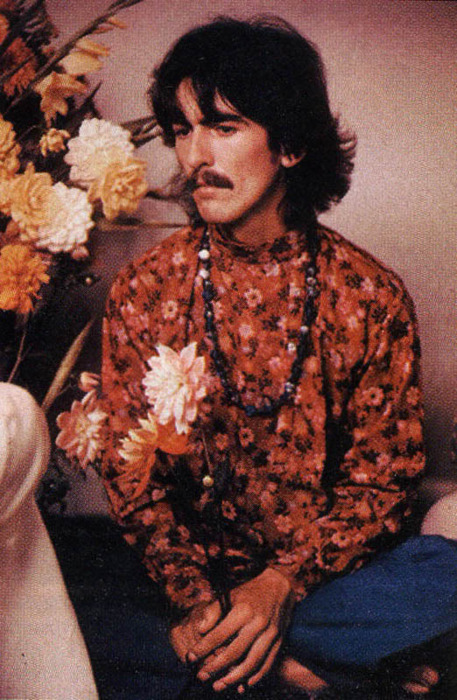
Probably most famous one - The Beatles in Kaftans/Nehru Jackets designed by The Fool for Magical Mystery Tour.
Paul McCartney in 1967
Paul outside his St. John's Wood home, 1967
John Lennon, 1967
George Harrison, 1967
Hippies at the Woburn Abbey festival in England, 1967
John's Children modelling 'kaftans' designed by John Stephen, 1967
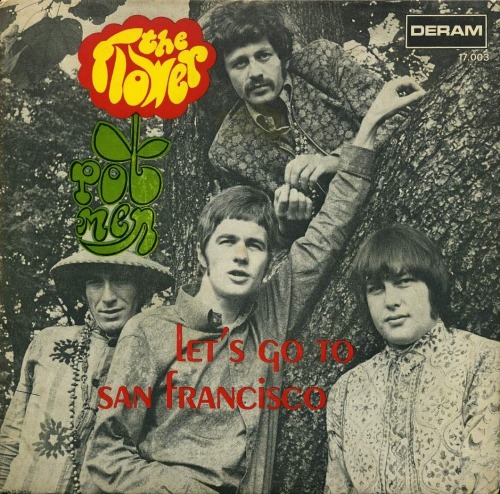
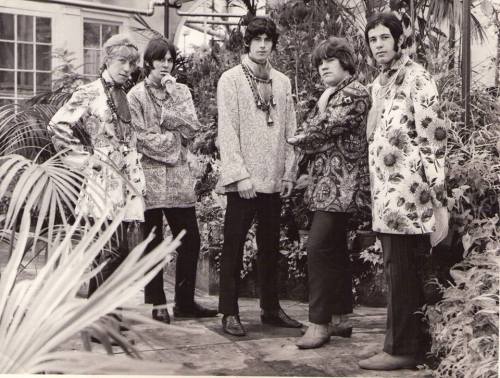
The Flowerpot Men, 1967
British psych band The Flies, 1967
British psych band The Onyx, 1967
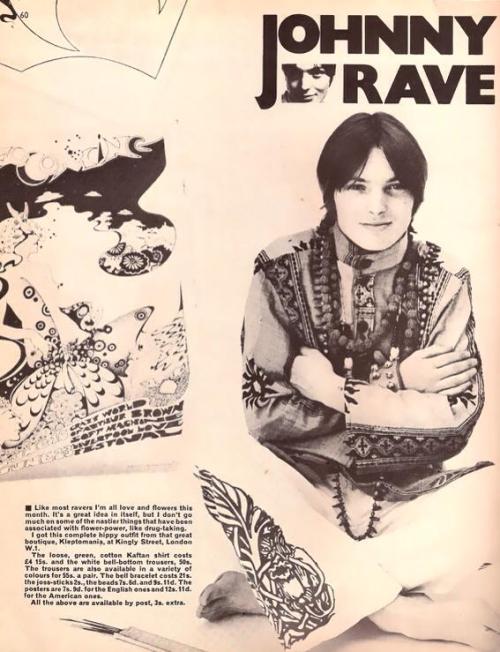
Rave magazine's resident model Johnny Rave, 1967
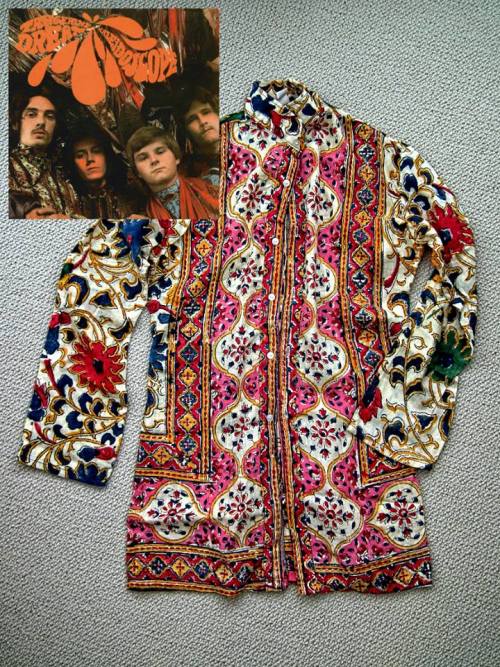
Kaftan which Peter Daltrey wore on the cover photo of Kaleidoscope's first album, Tangerine Dream, 1967
Davy Jones wearing the same kaftan.., 1967
Jimi Hendrix also had one...1967
Strawberry Alarm Clock, 1967
Davy Jones and Mickey Dolenz of The Monkees, 1967
Legendary DJ John Peel, 1967
The Hollies, 1967
English hippies, 1968
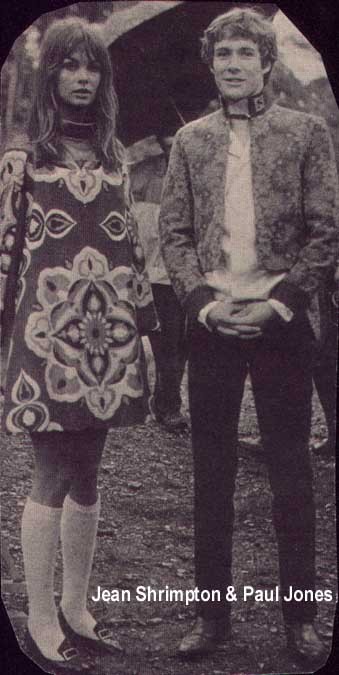
Jean Shrimpton and Paul Jones on the set of Privilege, 1967
Justin Hayward from The Moody Blues and Ian Gillian from Episode Six
(who of course would soon move on to bigger things as a frontman of Deep
Purple) modelling Carnaby Street 'kaftans' designed by John Stephen, 1967
Eric Burdon sporting 'kaftan' and Afghan coat - ultimate hippie combo - on the day of his wedding, 1968.
Dantalian's Chariot, 1968
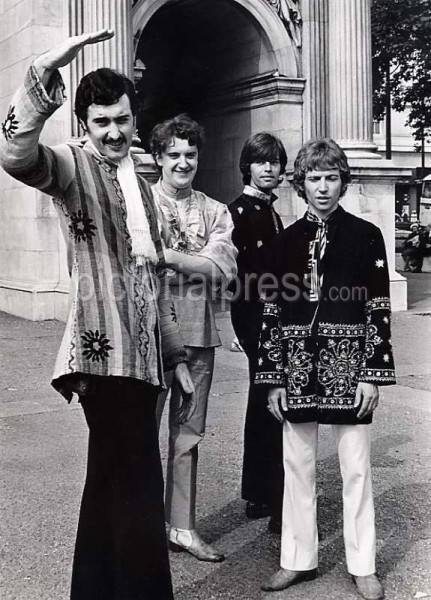
British psych band The Mode outside Walthamstow Town Hall, 1968
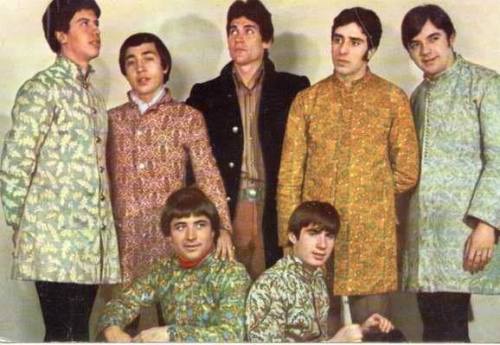
Spanish psych band Los Kifers, 1968
Italian band I Nomadi, 1967
Italian psych band Le Orme, 1967
French pop star Johnny Hallyday, 1967
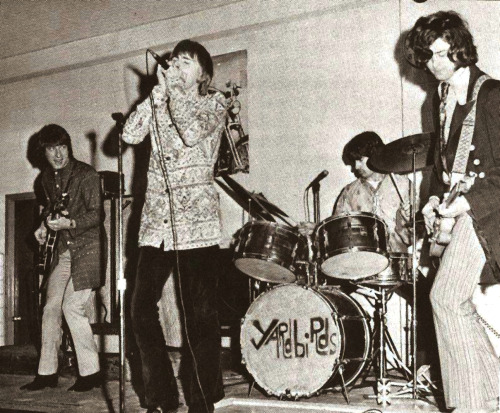
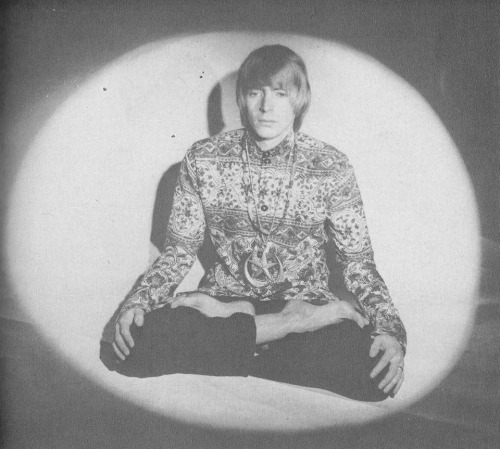
Keith Relf of The Yardbirds, 1967
Jimmy Page, 1967
Cliff Wade and The Roll Movement, 1968
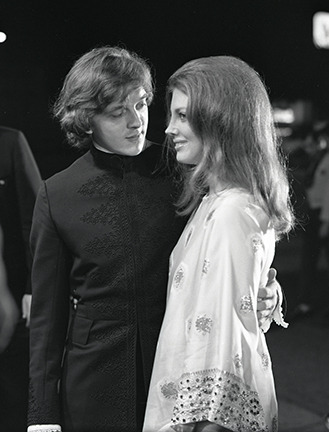
Actor David Hemmings with his wife Gayle Hunnicut, 1969
Ringo with Eva Aulin, 1968
Mick Jagger, 1967
Psychedelic kaftans/Nehru jackets went out of mainstream fashion around 1968. Very strongly associated with late 1960's, they are popular among revivalists. Clothing labels strongly influenced by 1960's fashions such as Art Gallery or Pretty Green, make kaftans and Nehru jackets today.