Tuesday, 13 August 2013

Bad Vibrations - 10 Great Dark Songs From The 1960's


As  Eddie Cochrane used to sing, There ain't no cure for the summertime blues....I must admit, I'm generally not too keen on summer. I'm terrible at dealing with heat, and I hate when weather forces me to wear just a t-shirt. Unlike the last two or three years, this year, we exceptionally do have an actual summer in Britain, with sun and heat and all, and frankly, I've had enough. On a more personal note, bad things in my life always seem to happen in summer, which would probably explain my dislike of it. This summer is no exception. So far, it has been rather dreadful, to put it mildly...

That it not to say it was completely rubbish. One of the high points was on Friday, when I sneaked in without a ticket to Patti Smith gig. She played a low-fi gig in a church in Brighton literally five minutes away from where I live. Tickets (£30 a pop) sold out really quickly, but thanks to kindness of friends, some masterful deception, and knowing the weak points of the venue, I have found myself inside shortly before Patti Smith went onstage. Any guilt I might have had about robbing Patti of £30 evaporated when she read an excerpt from her book Just Kids (an account of her life as a poverty - stricken bohemian in late 60's/early 70's New York), in which she talked about Robert Mapplethorne stealing that William Blake print (I'll spare you the details, read the book if you're interested). After that, I couldn't help but think that me sneaking into that gig was something that Patti - or her younger self, at least - would have approved of. Or so I like to tell myself. Funnily enough, she did a cover of Eddie Cochrane's Summertime Blues...

Anecdotes about my mischief aside, let me get to the point. Since usual summer playlists consist of 'feelgood' songs, I feel like doing something exactly opposite. Here I compiled a list of my my favourite dark songs from the 1960's. First, a couple of rules - what do I consider to be a 'dark' song? Well, it either has to have minor chord changes, or lyrics that talk about dark side of human nature or world in general. Something that makes you feel a bit uneasy. The songs I picked are 'dark' but not necessarily depressing. You can even dance to most of them. Overall, I would say that anger and confusion - rather that sadness - are prevailing emotions in the songs. The list is based purely on my personal taste, I don't claim the songs to be 'the best' - just the ones I like the most. Also, I tried to avoid 'too obvious' choices, like The Doors or Velvet Underground - in this blog I like to champion the obscure and the overlooked, not the overexposed (unless it's Syd Barrett or Brian Jones, that is). Unusually for me, most of the bands I included are American, rather than British. It's strange, I  never intended this blog to be exclusively about Britain in the 1960's, it's just that British Psychedelia and Swinging London era are a part of the 1960's I am most passionate about. But hopefully, brief departure from those themes will provide a much-needed breath of fresh air to this blog.

So, for those of you who like me, can't quite get into summer spirit, I present a look at the 1960's from a darker perspective... 


10. 'SEARCHING ' - THE OMENS (1966)

I don't know much about The Omens - they were one of countless bands that were being formed in the mid-1960's across America by kids, inspired by Beatles or Stones. I am not sure whether they ever released any other single that 'Searching ' or whether they ever played outside their hometown - wherever it was. Although there's nothing original about the lyrics to 'Searching ' the same cannot be said about that great apocalyptic riff and psychedelic solos on guitar and organ. For 60's Garage aficionados, this is an undisputed classic and instant dancefloor filler at every Psych/Beat/Garage clubnight today..


9. 'MY BROTHER, THE MAN'  - WE THE PEOPLE (1967)

Some of the best music recorded in 1960's never found its way to charts. Take We The People - brilliant band from Orlando led by certain Wayne Proctor. They released quite a few great singles between 1966 and 1969. Their song 'In The Past' should have been a huge hit. Same with 'You Burn Me Up And Down' , 'Mirror Of Your Mind' (which charted locally, apparently) and indeed 'My Brother, The Man' - which was a track from We The People's sole album Too Much Noise (1968). Just like in  'Searching' by The Omens, the power of the song is in this rather sinister riff. Commercial success might have eluded We The People, but with time they acquired a status of a cool, obscure band it is fashionable to list as an influence. Especially since London Psych/Mod/Goth heroes The Horrors paid tribute to We The People by stealing the riff from 'My Brother, The Man' for their own song 'Count In Fives' in 2007.


8. 'WHEN THE SHIP COMES IN' - BOB DYLAN (1964)

Hmm...Did I say 'no obvious choices'? Well, I lied..... But let's face it, when it comes to painting a bleak picture of reality, who can surpass protest-era Dylan? 'When The Ship Comes In' is a track from 1964 album The Times They Are-A-Changing. Reportedly, it was written one night after Dylan, while touring America with Joan Baez, was refused a hotel room due to his 'scruffy appearance'. A receptionist wouldn't give him a room unless Baez vouched for his 'good character'. Most of us mere mortals would probably demand to see manager and give him hard time, but Dylan sat in the lobby, and he quickly composed this little masterpiece about social injustice and the new order violently replacing the old one. Simple and pretty short (for Dylan's standards) song, but it contains more rage and anger than all the Clash, Sex Pistols and Dead Kennedys records put together. The new world anticipated by Dylan, failed to materialise. Perhaps that's what prompted him to abandon protest songs in favour of more introspective material in the mid-1960's. But that failure only makes this song still relevant today.  

It won't let me insert a video, listen to it here.


7. 'STORMY' - THE JESTERS OF NEWPORT (1966)

Another obscure corker from American Mid-West.  It starts off with a motif from 'In The Hall Of The Mountain King' by Edvard Grieg played on farfisa organ and then it descends into messy garage-rock madness. With the wild, howling vocals and distorted guitar, this song makes The Stones sound like Rosemary Clooney. I'm not sure whether The Jesters Of Newport ever recorded anything else, but they certainly deserve to be remembered for this brilliant song, which can be heard on Back From The Grave Vol. 5 compilation.

Click here to listen

6. 'A POX ON YOU' - SILVER APPLES (1968)

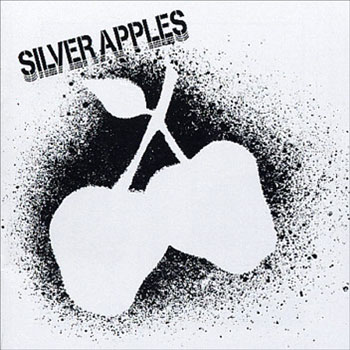
Electro pioneers Silver Apples were one of those bands who were so far ahead of their time, that nobody really 'got them' at the time of their existence. This New York  duo consisting of  synth player Simeon Oliver Coxe and drummer Danny Taylor released two albums between 1968 and 1969. Their eponymous first LP can only be described as a musical equivalent of insanity. You'll hear sounds you didn't even know were  possible to make - well, certainly not in 1968, at least. ' A Pox On You' might not be their best song (to me it's 'You're Not Fooling Me'), but it's definitely the most sinister-sounding one.  Silver Apples were thoroughly misunderstood and forgotten for many years, while the credit for many things they did first, went instead to much less impressive band from mid-1970's - Suicide. Luckily, in the last few years, Silver Apples were rediscovered and quickly achieved cult status in certain circles. Today, every Shoreditch hipster owns a vinyl reissue of their first album, and claims to have been into them before you were.


5. '1906' - THE WEST COAST POP ART EXPERIMENTAL BAND (1967)

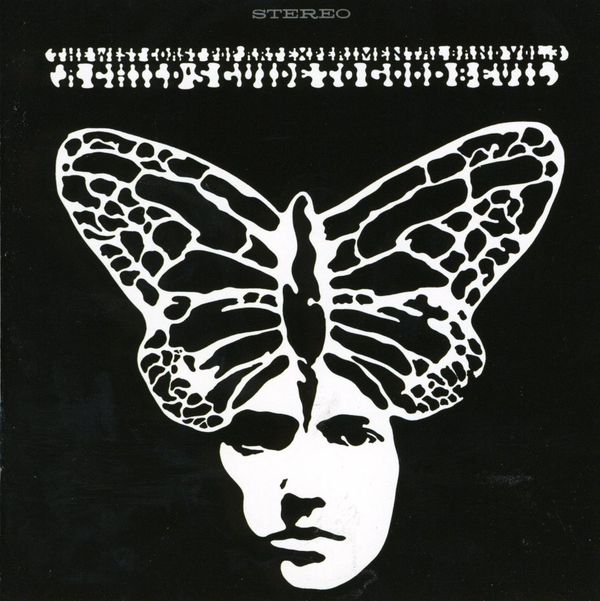
The West Coast Pop Art Experimental Band were a bizarre creation. The band consisted of Bob Markley - failed crooner and TV presenter in his mid thirties, and teenage brothers Shaun and Danny Harris. The band was put together and masterminded by legendary LA producer Kim Fowley in order to cash up on flower-power phenomenon. TWCPAEB released four albums between 1966 and 1970. Their brand of sitar-led psychedelic rock was nice, but rather unremarkable. Not 'Pop Art' at all and certainly not 'Experimental'. The West Coast Hippie Bandwagon Chasers - that would be much more suitable name for this band. Nevertheless, they had their three minutes of genius with '1906' - B-side of their 1967 single 'Shifting Sands'. The song sounds nothing like the rest of their material - it's fast, it has great riff and melody. I don't know whether the title of the song is supposed to be a reference to 1906 earthquake in San Francisco which destroyed 80% of the city - lyrics (which are spoken, and in the background) seem to be more about bad drug experience. Whatever it's about, it's one of the greatest dark songs of 1960's. Today it can be heard as a bonus track on the reissue of TWCPAEB's third album A Child's Guide To Good And Evil (1968), the cover of which you can see at the top of this post.


4. 'WHEN THE WIND ARISES' - THE ROKES (1968)

The Rokes were a band from London active mostly in Italy, where they had a hit with an Italian-language version of 'When You Walk In The Room'. Although they released a few singles in UK, none of them ever charted. 'When The Wind Arises' is a B-side of their final UK single 'The Works Of Bartholomew'. It is a very powerful and theatrical piece of psychedelic rock - a kind of song you'd want to hear while walking at the edge of the cliff during stormy night (my favourite pastime). I first heard it on Real Life Permanent Dream box set, and it's been one of my favourite songs ever since.


3. 'SKITZO BLUES' - SILK (1969)

A great piece of heavy, farfisa-led psych from America. Silk were a band from Cleveland signed to ABC. They released their sole LP Smooth As Raw Silk in 1969. 'Skitzo Blues' is a track from that album, and it can also be heard on Bevis Frond -curated psych compilation The Room Of Loud Sound.

Click here to listen to Skitzo Blues.


2. 'ALL ENDS UP' - TRACTOR (1969)

Prog Rock......the overblown, self-indulgent excesses of  ELP, Yes or Genesis in the mid-1970's had made prog terminally uncool. People almost forget that during its early years - between 1967 and 1971, prog was one of the most exciting genres. Back then, prog was less about long solos and showing-off and more about taking music into the exciting unknown directions. The living proof of that is this great track by Tractor - British band from Rochdale, Lancashire. The long, electronic intro builds up until you're hit with this amazing riff which takes you on a 7 minute dark odyssey. I first heard 'All Ends Up' at the Mousetrap about a year ago, and I must say it sounds even more impressive in the club with a proper soundsystem. I'd listen to this song on the loop for the next few weeks. Even now, I am still not bored with it. Great track from a band which should have been much bigger.


1. 'STRANGE HOUSE' - THE ATTACK (1967)

Now, I don't think I would be able to pick 'my favourite song ever', but I could certainly narrow the choices down to five, and this song would definitely be one of my top five. To me, it's one of the most perfect songs ever - it has everything: powerful, sinister riff, distorted vocals, great lyrics and overall weird and wonderful atmosphere. This song captures bad drug experience so well, that after hearing it, you will never have to even do drugs to know what it's like..
As for The Attack, they were a Mod band from London which was caught in the rapidly changing trends. They started off playing soul music - their single 'Anymore Than I Do' is a Mod classic - before moving on psychedelia in the late 1966. Despite having few good singles such as 'Too Old' , commercial success never came and The Attack disbanded in early 1968. Their guitarist Davey O'List went on to join The Nice, and remaining members formed heavy psych band Andromeda. 'Strange House' remains their finest hour and a cult classic - especially since London Psych/Mod/Goth heroes The Horrors paid tribute to  The Attack by stealing the title and naming their debut album Strange House in 2007.


Conclusion: Punk...Goth...Electro...all these genres already existed in 1960's, before the terms were coined.


So, that's it. Hope you enjoyed this little list. I welcome any additions - Can you think of any other great dark songs from 1960's?  Other than Doors or Velvet Underground?


Small correction: All Ends Up by Tractor is actually from 1972, not 1969 as I initially thought. But frankly I just can't be arsed to change it. It's still a great song which you need to hear.

Thursday, 25 July 2013

Rowan Bulmer - Swinging London's Forgotten Photographer


From Biba's advertising campaign, London, Kensington, 1966

Recently, I've been flicking through London fashion/culture magazine Jocks & Nerds, where I found the article about 1960's London photographer Rowan Bulmer. Unlike his contemporaries David Bailey, Terence Donovan, Brian Duffy, Robert Whittaker and many others, Rowan Bulmer and his work remain almost completely unknown today - which is unusual, considering Bulmer's high profile in the 1960's. He was friends with The Rolling Stones (reportedly, he introduced Mick Jagger to Chrissie Shrimpton), he photographed and hung out with Jimi Hendrix, Eric Clapton, Jeff Beck, Rod Stewart, he was an official photographer for Mod meccas - TV programme Ready Steady Go! and Marquee club. He did first ever Biba advertising campaign and countless fashion photoshoots. Normally, a photographer of such calibre would today have his work published in a Taschen coffee table book, exhibited in museums, and the prints would sell a £100+ per pop. But not Rowan Bulmer. There are various reasons for that. As Chris May wrote in Jocks & NerdsDriven by passion rather than careerism, Bulmer never bothered to archive his work. What's more, The Marquee club, which stored a large chunk of Bulmer's negatives, had unfortunately lost them when it moved out of Wardour Street in 1988.


Rowan Bulmer dancing the Twist, Eel Pie Island, 1962

In 2011, Bulmer's daughter Tahita (who is a lead singer in indie band New Young Pony Club) has found a large box of old prints that her father left in UK after moving to South of France year earlier. Box contained unseen photos of Stones, Hendrix , The Who and other legendary musicians as well as fashion photos and various snapshots of Swinging London scene. According to Chris May, Bulmer seemed surprised that anyone would be interested in his story (or his photos).


And what a fascinating story it is (A classic case of right place, right time - Chris May). Bulmer was born in 1943 and grew up in Chiswick. At 16, he enrolled at Chelsea College of Art. Like many of his art school pals, Bulmer was a jazz and Rn'B enthusiast and quickly became a regular on Soho's beatnik/coffee bar scene. One of his favourite hang-out at that time was Duke Of York pub in York Alley, Soho. He remembers: The Duke Of York is probably where it all started. It was very important. Rod Stewart, Long John Baldry, they they all hung out there. everyone was drinking and smoking dope non-stop. Everyone was scoring and there was Benzidrine and heroin. I never got into drugs myself. I saw it wreck too many people and made a decision early on.  Around 1962, Bulmer started hanging out in the Ealing Club, Richmond's Station Hotel, Crawdaddy Club and Eel Pie Island - a places now considered a cradle of British Rn'B scene. He witnessed early gigs of The Pretty Things, The Downliners Sect, The Artwoods, Cyril Davies All Stars, Alexis Korner's Blues Incorporated, Jimmy Powell and The Five Dimensions (featuring Rod Stewart), The Tridents (Jeff Beck's first band). He witnessed Eric Clapton, Peter Green and Mick Fleetwood learning their trade before they hit superstardom. I first went to Eel Pie Island when I was 15 - he remembers. I became a pot boy, collecting empty glasses from the tables. It was a traditional jazz club and then they brought in Rn'B on Wednesday nights. I loved it all.  

Keth Moon photographed by Rowan Bulmer

Around that time, Bulmer became a photographer. All these musicians I knew started to need photographs, and I thought, 'I can do that'. And because they were my friends, I took a lot of shots just for myself. Among his numerous musician friends were The Rolling Stones whom he met through Giorgio Gomelsky - owner of Crawdaddy Club and Stones' early manager, when he was shooting promotional film about The Stones in 1963. They were filming at station Hotel - Bulmer remembers - I was well known as a dancer and they were waiting for me to arrive before they started filming. The Stones were playing 'Pretty Thing' and the girl  I was dancing with happened to be Brian Jones' girlfriend Linda Lawrence. She later married Donovan, hence the song 'Linda'. Anyway, I went to a work-in-progress screening at the Intrepid Fox pub on Wardour Street and afterwards I was chatting to Giorgio and he realised that I knew everyone. He was worried that he would get troublemakers at the Crawdaddy and he asked if I would work with him and keep an eye out for these characters. So I stopped going to Eel Pie so often and I was with Giorgio. This was when I got to know the Stones well.

Mick Jagger photographed by Rowan Bulmer in 1967

Bulmer was very close to Brian Jones - at one point they even considered moving in together. Bulmer says: We went flat hunting together a lot. We looked at lots of places, but somehow it didn't happen. Some people didn't like Brian, but I did. He was generous and he was really passionate about the blues. Evidently, Bulmer was less impressed by Andrew Loog Oldham - a young manager, who snatched The Stones from Giorgio Gomelsky. He was alright. A bit arrogant. I didn't really know him before he took over the Stones. There were a lot of people trying to get the Stones at that time. I was surprised when he got them.
By 1964, Rowan Bulmer was approached by the producers of new TV programme called Ready Steady Go!. He became an official photographer for this soon-to-be-cult Mod show. His other role in RSG! was finding new hot bands for the show - perfect for somebody with his connections and position on the scene.

Roll of film Bulmer shot at RSG! around 1965 - if you clack on it you can see Cathy McGowan and some soul band - anybody knows who they are?


Around that time Bulmer also became an official photographer at the Marquee Club, where he shot pretty much anybody who was anybody in the 1960's London. Unfortunately, his decision of storing his negatives at the club proved disastrous.


Ronnie Wood, Chris Barber and Jeff Beck at the Marquee, 1967

Bulmer also took a lot of photos at The Speakeasy Club.

Jimi Hendrix Experience at The Speakeasy, 1967

Drag artist at The Speakeasy, 1967

Eric Clapton onstage with Cream, National Jazz and Blues Festival, Windsor, 1966

Mods, National Jazz and Blues Festival, Windsor, 1966

Geno Washington, 1965
From 1964 onwards, Bulmer also worked as a fashion photographer.
Fashion shots featuring model Wendy Richards, circa 1965

When Barbara Hulanicki opened Biba, she hired Rowan Bulmer to do the advertising campaign.

Photoshoot for Biba, Kensington Church Street, 1966
Fashion shoot at Yellow Submarine club, London, 1966. I don't know who the designer was but the clothes look amazing. I wish we could see a better quality version..

Same goes for this menswear ad from around 1966

London Mod/Psych band The Syn (their line-up included Chris Squire - future member of Yes) modelling newest Carnaby Clobber outside Marquee Club, 1967

Immaculately-looking Rod Stewart with female friends, 1967 ( I wonder where this photo was taken. I can see some David Bailey prints in the background...)


Rowan Bulmer continued working as a photographer in London in the 1970's. In 1980's, he moved to Ilkley,Yorkshire. He created large-scale sculptures on the Yorshire Moors. Around that time he also had his own art exhibition at the Institute of Contemporary Art in London. In 1984, Bulmer, passionate anti- Thacherite, joined a picket lines during miners' strike (I've always been on the Left - he says. My parents were Tory councillors; it's a reaction to that).
In the 1990's Bulmer returned to London. He opened his own studio on King's Road in Chelsea, where he worked until his retirement in 2010. Today, he lives in Dordogne in southwest France.
I don't know how much is left from his 1960's work, but I sure hope to see more. Rowan Bulmer doesn't seem interested in 'cashing-up', but the reasons for restoring and publishing the remains of his 1960's work do not have to be financial. Contrary to what he might think, there is a lot of interest in this, now legendary, era.


All the photos and quotations come from Chris May's article in Jocks & Nerds magazine, Volume 1 Issue 7, p 48-57.

Tuesday, 16 July 2013

Dandies in Kaftans


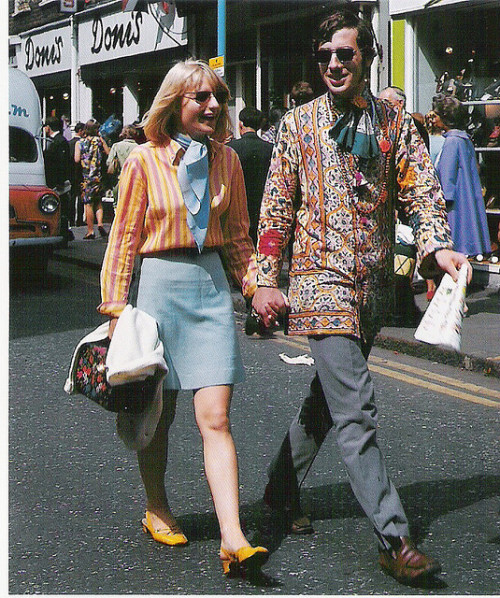
Carnaby Street, 1967

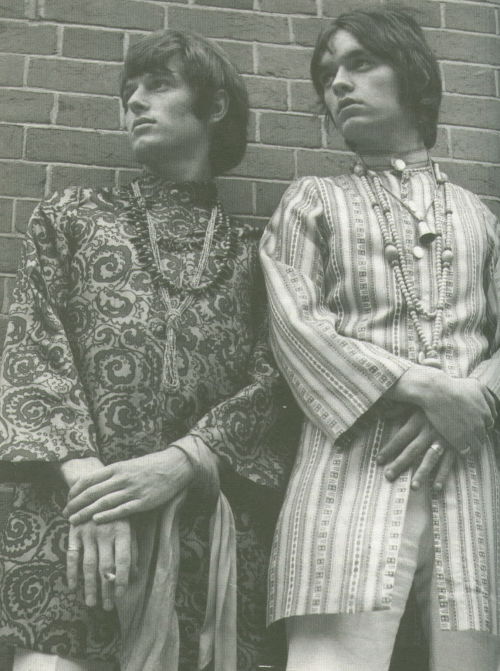
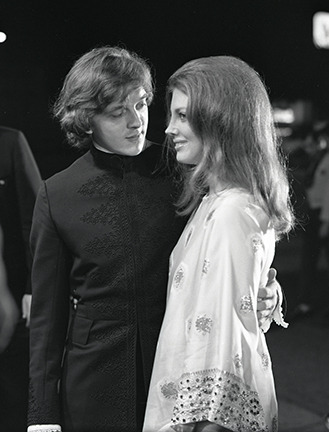
When it comes to male fashion, kaftans will always be associated with that brief period between late 1966 and early 1968. For  those several months kaftans were all the rage - an obligatory component of psychedelic dandy/peacock/hippie look. 
The term 'kaftan' is not really correct. Kaftan is a garment of Persian origin - a type of overdress usually reaching the ankles, with long sleeves. 'Kaftans' worn by fashionable men in late 1960's were in reality Nehru Jackets. It is a garment of Indian origin, named after Pandit Jewarharlal Nehru - a Prime Minister of India between 1947 and 1964. He often wore front-buttoned, knee-length jackets with mandarin collar known as ackhan or sherwani.

    Pandit Jewarharlal Nehru

 In the late 1940's, the garment based on ackhan was created in India, and it was known as Band Gale Ka coat ('Closed Neck' coat). It was considerably shorter that ackhan, usually only reaching hips rather than knees. In fact, apart from the mandarin collar, the garment closely resembled normal suit jacket. Band Gale Ka coat were popular in India as a top half of the suit for formal occasions. In early 1960's, it was popularised in western Europe in America, where it was known as 'Nehru jacket' (Even though Pandit Jewrharlal Nehru never actually wore it himself!). One of earliest examples of Nehru jacket in Western popular culture was the outfit of Dr. No -  the villain from 1962 James Bond movie.


 By the mid-1960's, the Nehru jacket became a part of late Mod/early Hippie Carnaby Street look. 

The Who's Roger Daltrey (second left) wearing a nehru jacket appropriated for late-period Mod style, 1966

From 1967 Carnaby Street Modern Man catalogue - note the incorrect use of the term 'Kaftan'.

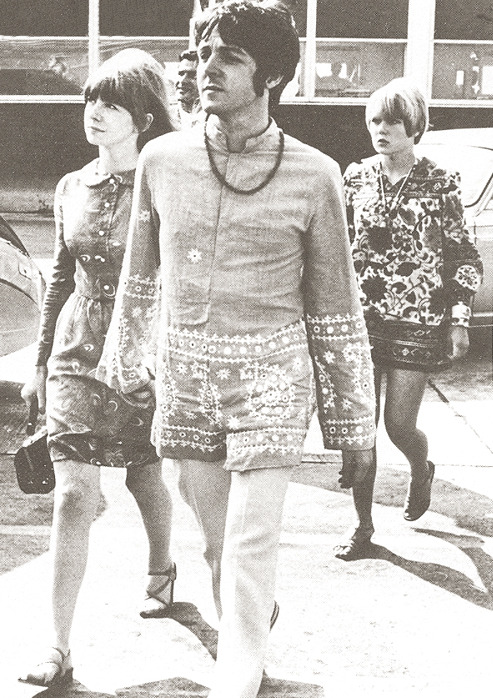
These clothes were a little bit of hybrid - they were too short to be proper Kaftans, and often too long to be proper Nehru jackets. Nevertheless, both terms were often used (just like Peacock style was often referred to as 'Regency', even though it hardly ever resembled actual Regency-era styles - but that's a subject for a different post).  These Nehru Jackets/Kaftans ere often designed with a generous use of Paisley, Liberty prints, various kinds of embroidery or 'Eastern' patterns (Indian, Chinese, Persian, there were even elements of Russian and Central European peasant dress) - a true mish-mash of styles and influences.
Here are my favourite examples:

Probably most famous one - The Beatles in Kaftans/Nehru Jackets designed by The Fool for Magical Mystery Tour.

Paul McCartney in 1967


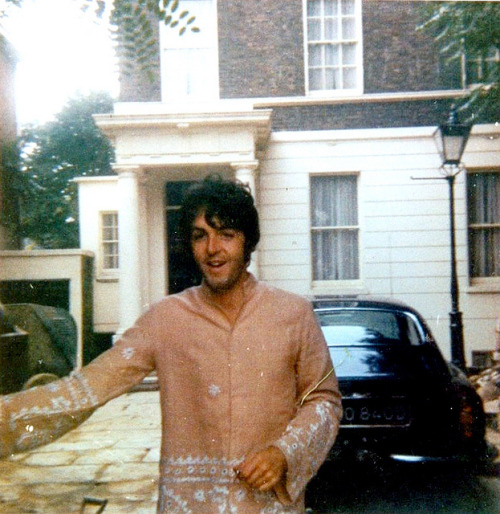
 Paul outside his St. John's Wood home, 1967

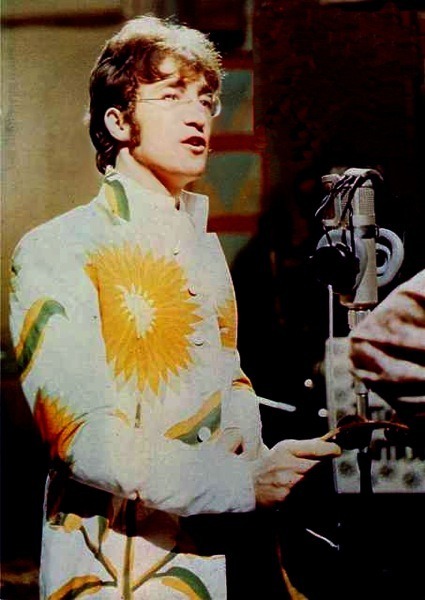
John Lennon, 1967 

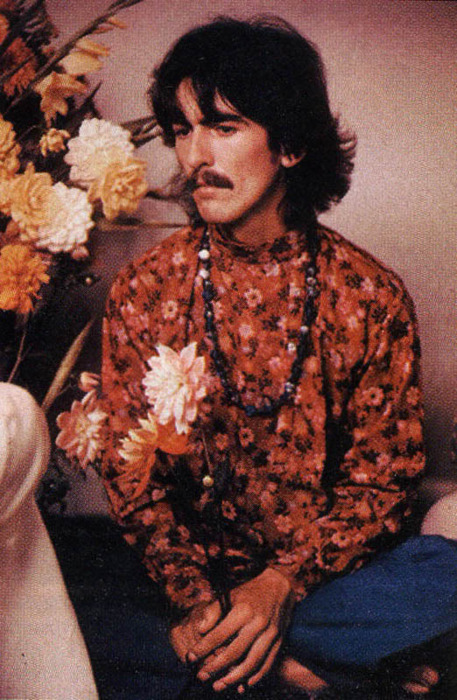
George Harrison, 1967

Hippies at the Woburn Abbey festival in England, 1967

John's Children modelling 'kaftans' designed by John Stephen, 1967

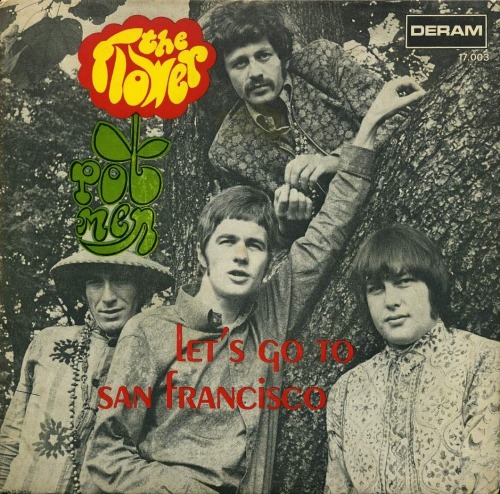
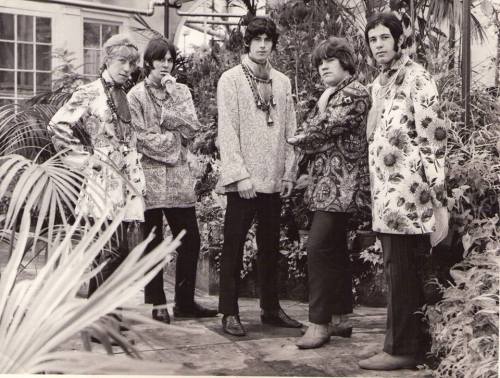
The Flowerpot Men, 1967

 British psych band The Flies, 1967

British psych band The Onyx, 1967


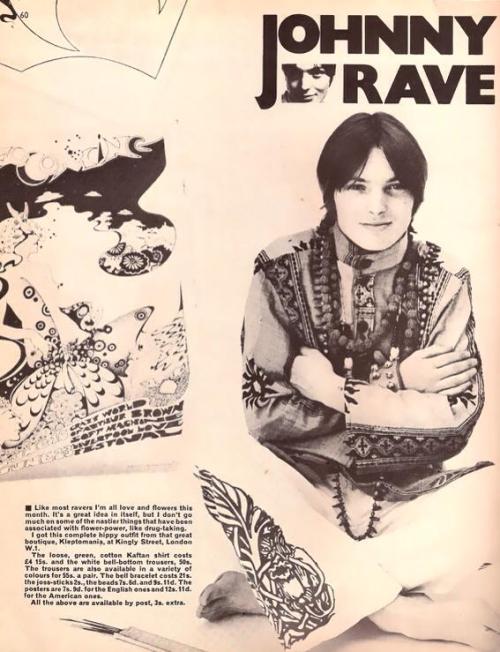
Rave magazine's resident model Johnny Rave, 1967

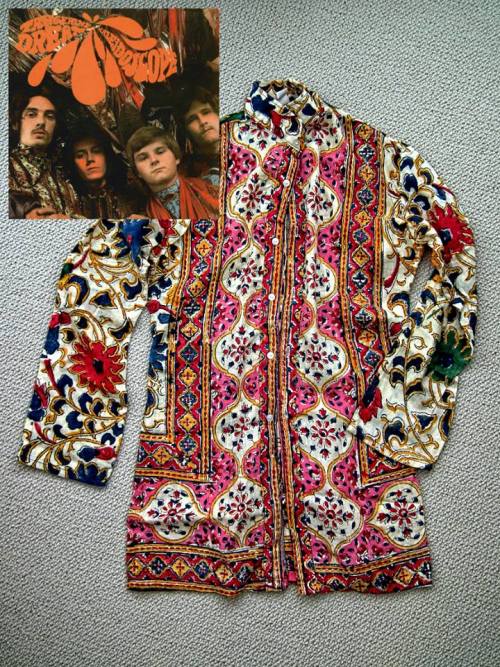
Kaftan which Peter Daltrey wore on the cover photo of Kaleidoscope's first album, Tangerine Dream, 1967

Davy Jones wearing the same kaftan.., 1967

Jimi Hendrix also had one...1967

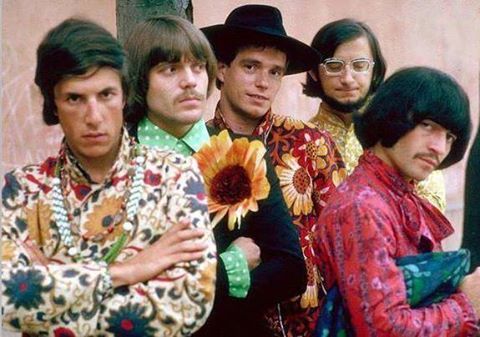
Strawberry Alarm Clock, 1967

 Davy Jones and Mickey Dolenz  of The Monkees, 1967

Legendary DJ John Peel, 1967

The Hollies, 1967

English hippies, 1968

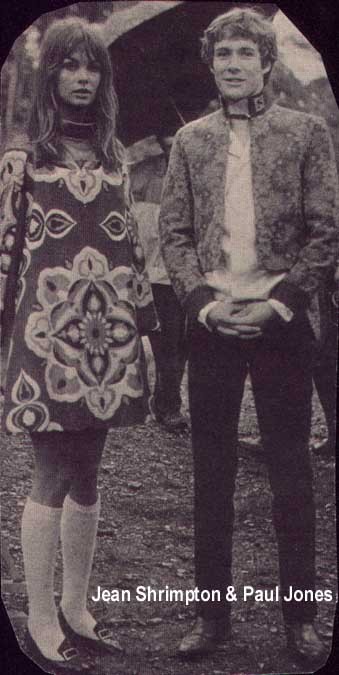
 Jean Shrimpton and Paul Jones on the set of Privilege, 1967

Justin Hayward from The Moody Blues and Ian Gillian from Episode Six (who of course would soon move on to bigger things as a frontman of Deep Purple) modelling Carnaby Street 'kaftans' designed by John Stephen, 1967
Eric Burdon sporting 'kaftan' and Afghan coat - ultimate hippie combo - on the day of his wedding, 1968.


Dantalian's Chariot, 1968

British psych band The Mode outside Walthamstow Town Hall, 1968

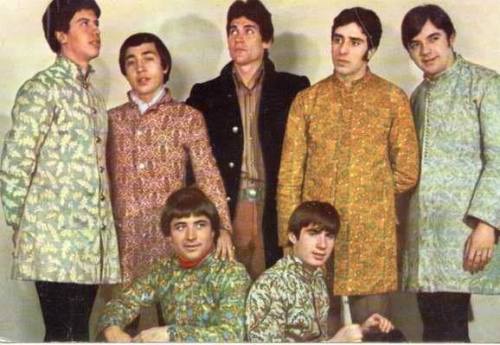
Spanish psych band Los Kifers, 1968

Italian band I Nomadi, 1967

Italian psych band Le Orme, 1967

French pop star Johnny Hallyday, 1967

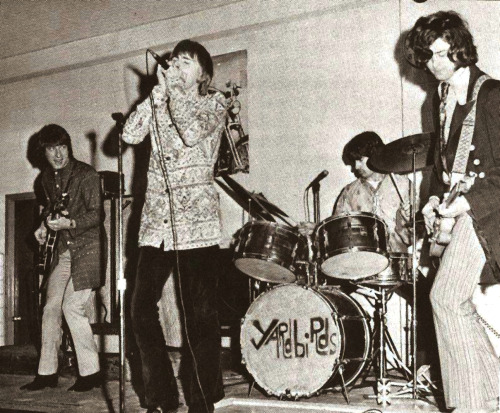
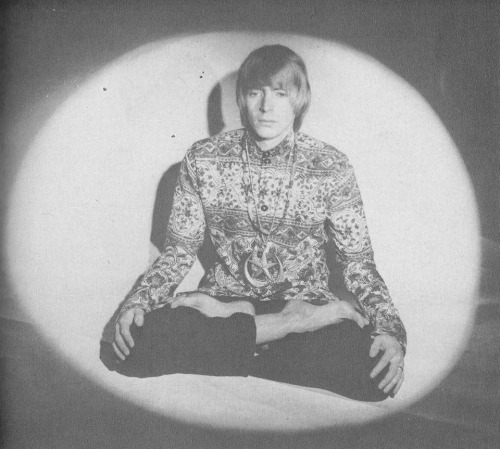
Keith Relf  of The Yardbirds, 1967

Jimmy Page, 1967

 Cliff Wade and The Roll Movement, 1968

 Actor David Hemmings with his wife Gayle Hunnicut, 1969

Ringo with Eva Aulin, 1968

Mick Jagger, 1967


Psychedelic kaftans/Nehru jackets went out of mainstream fashion around 1968. Very strongly associated with late 1960's, they are popular among revivalists. Clothing labels strongly influenced by 1960's fashions such as Art Gallery or Pretty Green, make kaftans and Nehru jackets today. 

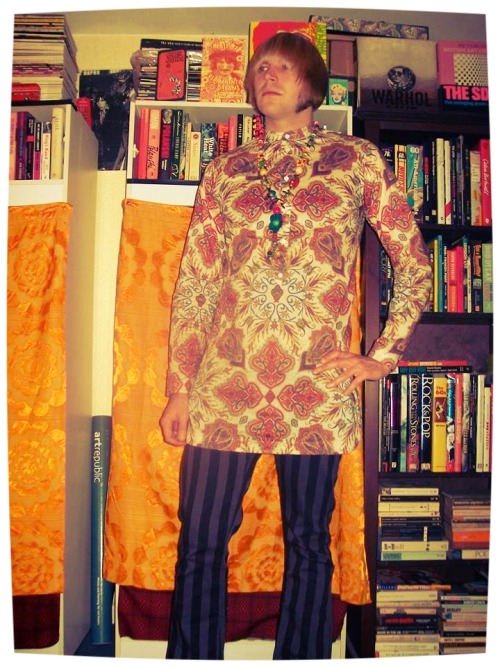
Yours truly..

BIBLIOGRAPHY AND IMAGES
The 60's by Bill Harry
Hippie by Barry Miles
Wikipedia
Anorak Thing , Smashingbird, Away From The Numbers, Afterglow
Sea Of Joy (I Don't Like Mods)